

Tongues is Not the Proof: An Examination of the Gift’s Place and Purpose
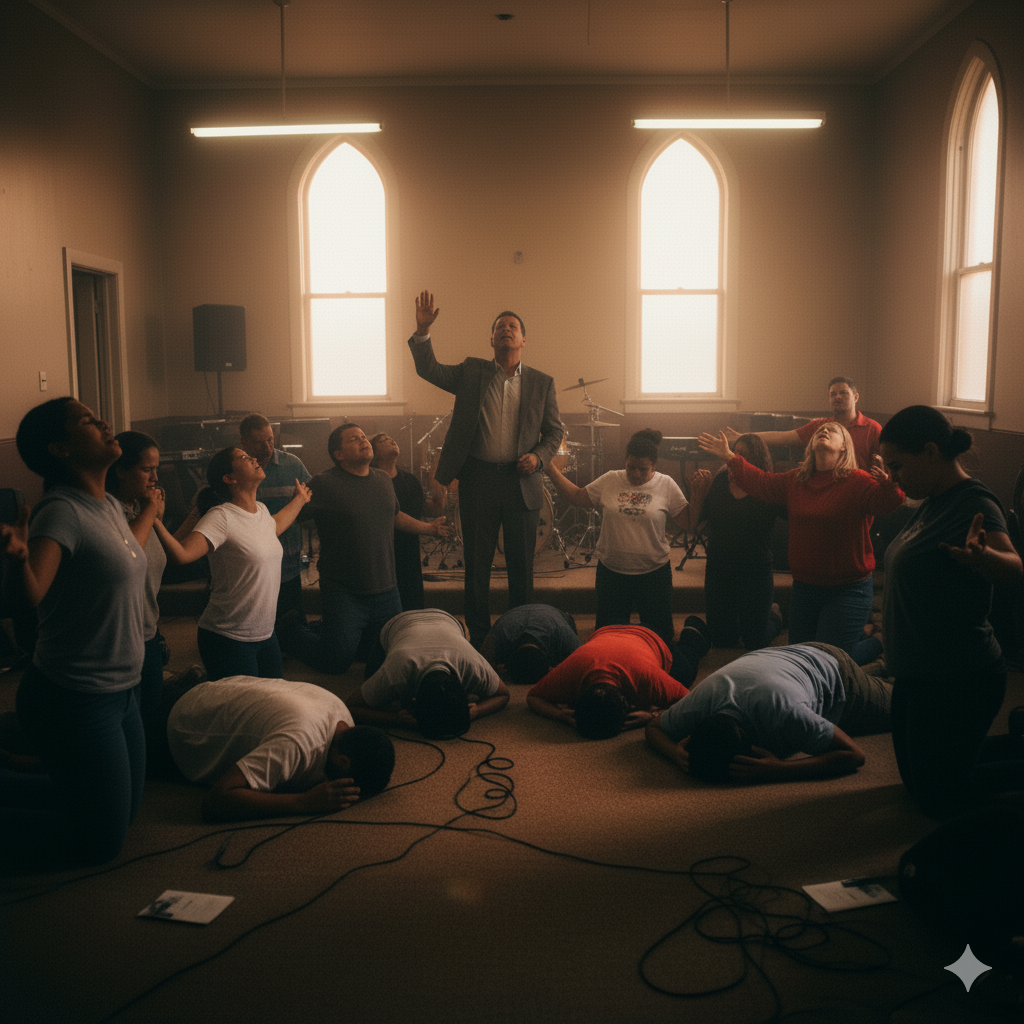
Stop Wondering: What the Bible Actually Says About the Gift of Tongues
In Christian circles today, the gift of tongues is a common and often intensely argued topic. Many sincere believers claim this gift, experiencing results that seem beneficial to their spiritual lives. This raises a critical question for serious Christians: Is my spiritual experience incomplete if I don’t seek the gift of tongues?
We must settle this question not based on personal testimony or powerful feelings, but on the unyielding authority of Scripture.
Experience is Secondary to Scripture
It’s vital to acknowledge that many Christians are having genuine, heartfelt experiences. These moments are real. However, the definitive question is not, Is the experience real? But is the experience scriptural?
It is entirely possible to have a powerful personal experience that is not against the Bible, yet is still not a biblical one, meaning it may not be the type of spiritual practice God has ordained for the church today.
We must adhere to this absolute principle: The Bible must be the test for all experience, never the reverse. If we allow experience to interpret Scripture, we trade God’s stable truth for subjective human feeling.
5 Definitive Biblical Facts on the Gift of Tongues
To find clarity on this gift and its place in the modern Christian life, we must focus solely on what the Bible unequivocally teaches!
1. Baptism of the Spirit Does Not Require Tongues
Every single believer has been baptized by the Spirit (1 Cor. 12:13 CSB), a non-repeatable act that places one into the Body of Christ. This is distinct from the filling of the Spirit, which brings power and is a repeated command.
Crucially, the presence of tongues is not a necessary sign, proof, or accompaniment of Spirit baptism.
- Consider the Corinthians: Paul confirmed that all were baptized by the Spirit (1 Cor. 12:13 CSB). Yet, he later posed the question, “Do all speak with tongues?” (1 Cor. 14:5 CSB), clearly implying they did not.
- Significantly, Paul nowhere in his letters commands or even encourages those without the gift of tongues to seek it.
Therefore, any doctrine insisting that one must speak in tongues to prove the Spirit’s presence is definitively not following Scripture (Ryrie, 1994, 76).1
2. Spiritual Gifts Were Limited by Design
The Body of Christ is built on interdependence. Not every Christian has all the gifts; indeed, few, if any, have them all.
This limitation applies across the generations as well:
- God’s Power is Unchanged; His Program is Not: The assertion that God must give a gift today because He gave it in the first century due to His “sameness” is flawed. God’s power is unaffected by a change in His program. He can give a gift in one era and withhold it in the next (like healing a person, but not removing Paul’s own thorn in the flesh, 2 Cor. 12:7−10 CSB), without compromising His omnipotence.
- Apostleship and Prophecy Were Foundational: Gifts such as apostleship and prophecy were specifically given to the few in the founding era of the church (Eph. 2:20 CSB). Since we are no longer laying the foundation, we neither need nor expect these foundational gifts today. We must recognize that certain spectacular gifts, including tongues, served a confirming purpose for those who first heard the message (Heb. 2:3−4 CSB).
3. Scripture Directly States Tongues Will “Cease”
The plain statement in 1 Corinthians 13:8 (KJV) is definitive: “Whether there be tongues, they shall cease.”
The Greek verbs concerning the cessation of gifts provide a powerful clue (Ryrie, 1994, 80):2
- Prophecy and knowledge will be “abolished” (passive voice, done by an outside agent, God).
- Tongues will “cease” (middle voice, meaning they will stop or cease of themselves).
This linguistic distinction suggests that the authentic, scriptural gift of tongues was intended to die out naturally, ceasing to be distributed during that founding, apostolic era.
4. Tongues Ranks at the Bottom of Important Gifts
When the Apostle Paul listed spiritual gifts, he explicitly placed them in an order of importance (1 Cor. 12:28 CSB): Apostleship, Prophecy, Teaching, Miracles, Healing, Helps, Administration, and lastly, Tongues.
The immediate command that follows is the answer to the believer’s core question: “Earnestly desire the better gifts” (1 Cor. 12:31 CSB).
The proper spiritual response is not to seek the least important gift on the list, but to focus on exercising the better gifts, like the often overlooked gift of helps, which ranks higher than tongues. Genuine spirituality is proven not by spectacular displays, but by routine faithfulness (Ryrie, 1994, 81–82).3
5. Christlikeness Is Not Dependent on Tongues
The goal for every believer is Christlikeness. The Fruit of the Spirit listed in Galatians 5:22−23 (CSB) is the blueprint for this character: love, joy, peace, patience, kindness, goodness, faithfulness, gentleness, self-control. Speaking in tongues is notably absent from this list.
Furthermore, we have no biblical record of Christ ever speaking in tongues. You can perfectly imitate your Savior without the experience.
If you desire deep, abiding fellowship with the Lord, that is achieved through a deeper knowledge of His Word, not through seeking an experience that is debatable and ranks lowest in importance. When in doubt, commit to the clear, spiritually superior means of growth.
Notes
- Charles C. Ryrie, Balancing the Christian Life ([Insert Publisher Location]: The Moody Bible Institute of Chicago, 1994), 76.
- Ryrie, Balancing the Christian Life, 80.
- Ryrie, Balancing the Christian Life, 81–82.


1 Corinthians 12:12–27 (ESV) 12 For just as the body is one and has many members, and all the members…
Interesting topic but with some debate. Yes, God gifted us with the amazing gift of Grace, but I feel that…
Interesting topic but with some debate. Yes, God gifted us with the amazing gift of Grace, but I feel that…
There will be several teachings on Matthew is there a certain verse you question?
Great summary. Would you also be willing to add that Matthew’s Gospel is also a challenge for believers as Jesus…